Your goals, your current strength, and the equipment you actually have.
Sleep, HRV, resting heart rate — before every session, not after.
See your own pattern for yourself. Skip it if it's not useful to you.
From a trainer, a PDF, or your own notes — Zena adds the coaching layer.
How it works
Want to learn how to do a pull-up? Increase your squat or deadlift weight? Or just get back into training after a break. Zena creates personalised programs based off your current strength, equipment, injuries, and how you want to train.
WEEK 1 · DAY 1
Upper body strength
Sleep, HRV, resting heart rate, and a proprietary waking heart rate signal — every day, not just when you feel it.
TUESDAY · WEEK 2
"You're primed for a heavy session. Push the main lifts today."
Not just a green light — a suggestion on the exact lift in front of you, based on what you've actually been lifting.
BENCH PRESS · TODAY
"You've hit 35kg for 5 reps at RPE 7 the last two sessions — try 37.5kg today."
Every program is uniquely yours. Reach your goals, quicker.
Everyone's goals are different. Generic training plans can slow your progress. Want to increase your squat by 10% and get a first pull-up at the same time? Most programs are generalised strength training or built around a single focussed goal. Zena helps you create a customised program, designed just for you, no matter what your goals are.
The fundamentals
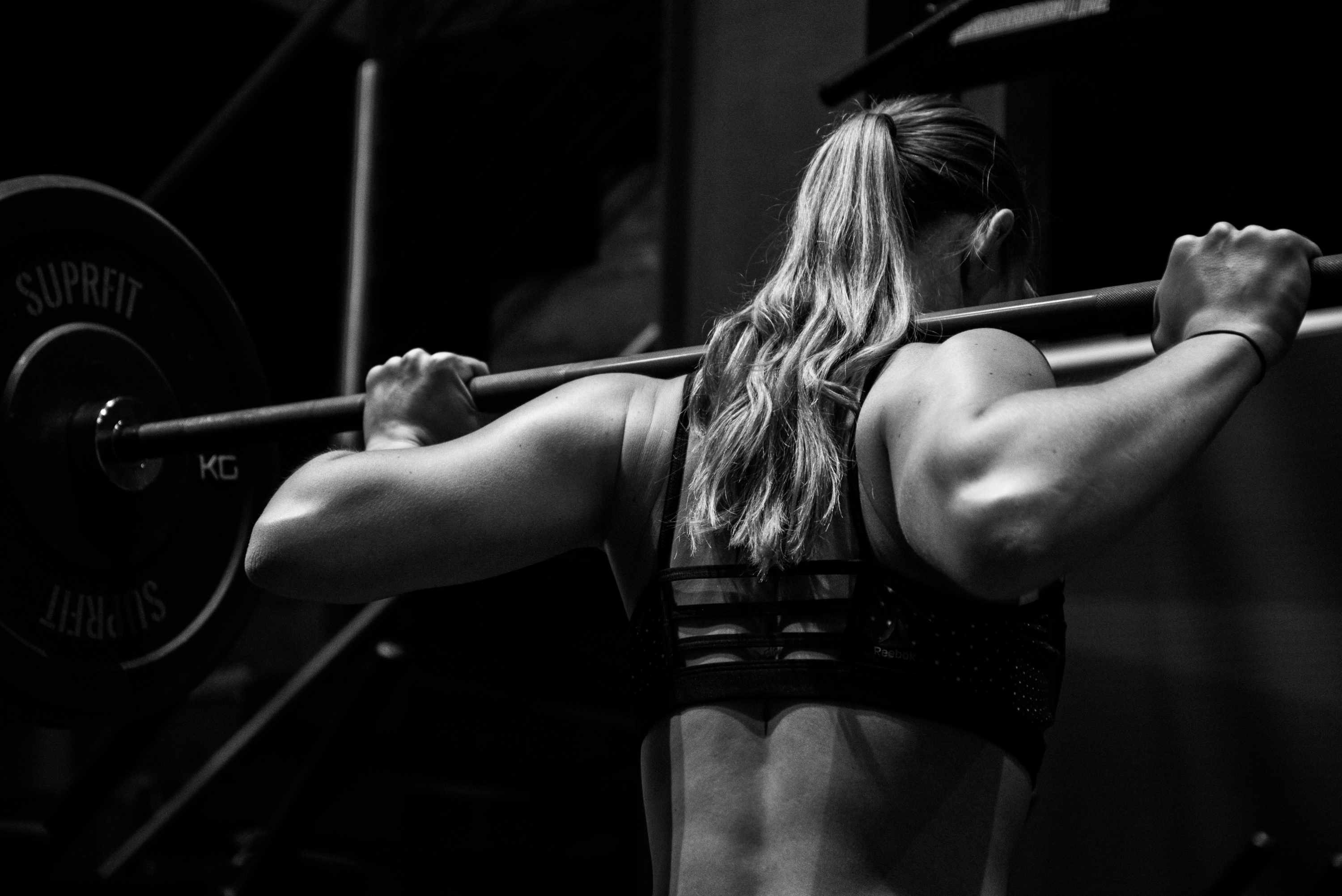
Strength training builds more than muscle. It protects bone density, improves metabolic health, supports joint stability, and — reliably, across the research — helps women stay independent and capable for longer. It's one of the few interventions with evidence behind it at every life stage, not just one. And because bone density and muscle mass both decline naturally with age, the payoff compounds over time — the earlier you build the habit, the more it's protecting later.
None of that requires a "toning" program, a lighter set of dumbbells, or a plan designed to make you smaller. The fundamentals of building real strength look the same for everyone: progressive overload, enough recovery, and consistency over time. What's different for women is what's underneath that — hormonal cycles, recovery patterns, and how strength training programming has historically defaulted to male physiology as the baseline.
That gap — training built for a male-default body, awkwardly relabeled "for women" — is the actual problem worth solving. Not a separate, lighter version of strength training.
What to know before you start
Yes — that's what Zena is built to do. Most strength training apps for women hand you a fixed plan and leave you to figure out the rest. Zena builds a personal program around your goals and equipment, then reads your recovery (sleep, HRV, resting heart rate) before every session to tell you whether to push or ease off, with cycle data folded in as information, not a rule. It's the layer most apps skip — not just logging the workout, but coaching the decision behind it.
Nope. Significant muscle size requires a sustained caloric surplus and specific, deliberate training most women aren't doing by accident. Strength training makes you stronger, more capable, and more defined — not suddenly bulky. This is one of the most persistent myths keeping women away from the weight rack, and it isn't supported by how muscle actually grows.
Most women make the fastest, most sustainable progress training 2–4 times a week, with enough recovery between sessions that hit the same muscle groups. More isn’t automatically better — under-recovered training stalls progress just as often as under-training does. The right frequency depends on your recovery, not a fixed rule, which is exactly the piece most static programs get wrong.
Both work. Free weights (dumbbells, barbells, kettlebells) build stabilizing strength and transfer better to real-world movement; machines are useful for isolating a muscle safely, especially early on or around an injury. The best program uses whichever you actually have access to — not a rigid ideology about which is "real" training.
The honest answer: the research is genuinely mixed. Some studies find real shifts in strength and recovery across the menstrual cycle; others find no measurable effect at all. Anyone telling you it's settled science — in either direction — is overclaiming. What's useful is seeing your own pattern, not following someone else's rule.
The core principles don't change at any age — progressive overload, recovery, and consistency still drive results. What does shift over time is the stakes: bone density and muscle mass both decline naturally with age, so the protective effect of strength training becomes more valuable, not less, the longer you keep it up. Recovery capacity can also change, which makes a program that actually reads your recovery — not just your training log — more useful over time, not just at the start.
No leaderboards. No benchmarks against anyone else. Progress is measured against one person only — you.